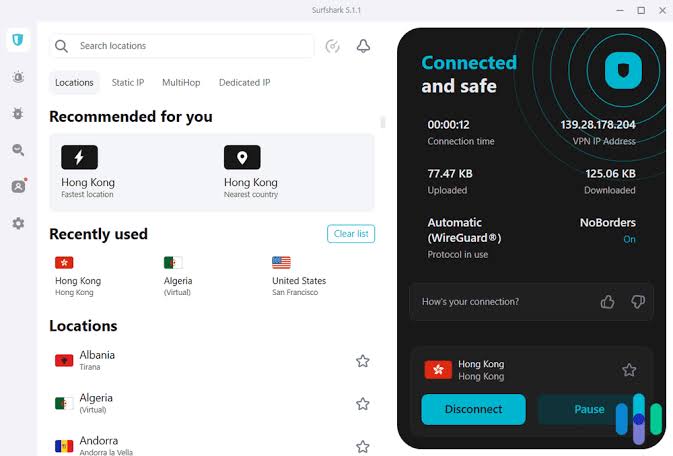
Remote work has permanently changed how professionals relate to geography. A developer based in London might manage infrastructure for a Hong Kong-based company. A marketing consultant in Southeast Asia might handle accounts for clients operating across the Asia-Pacific region. For these professionals, a vpn with hong kong ip address is not a luxury—it is an operational necessity that removes geographic friction from daily work.
Why Remote Workers Specifically Benefit From a Hong Kong IP
The most immediate benefit is access. Many enterprise platforms, banking systems, and business tools authenticate users based on IP geolocation. If your employer’s internal systems are configured to allow connections from Hong Kong only, a Hong Kong IP address is the key that opens that door.
For freelancers and consultants, the advantage extends further. Platforms that serve Hong Kong markets—including local payment processors, regional advertising networks, and government business portals—require a Hong Kong-based connection to function correctly. Working remotely without this capability means constant friction when managing client accounts or monitoring regional performance metrics.
Access to Hong Kong Business Tools and Platforms
Several categories of professional tools are restricted to users with a Hong Kong IP address:
Financial and banking services: Many Hong Kong banks enforce geographic restrictions on online banking access. Clients who travel or work remotely risk being locked out of their accounts without a Hong Kong IP to authenticate their session.
Government and regulatory portals: The Hong Kong Companies Registry, Inland Revenue Department, and related portals are frequently accessed by business owners and legal professionals managing local entities. Geographic IP filters on some of these services make a Hong Kong IP address practically essential for remote compliance work.
Regional advertising platforms: Running campaigns targeted at Hong Kong audiences requires the ability to view localized ad results, check regional pricing, and verify how listings appear to local users. A Hong Kong IP delivers an accurate, unfiltered view of the regional digital landscape.
Staying Connected to Hong Kong Media and Content as an Expat
For the hundreds of thousands of Hong Kong residents living abroad—and the international community with strong ties to the city—staying connected to local media is both a personal and professional priority. Local news broadcasts, entertainment platforms, and sporting events are licensed for Hong Kong viewing only.
A VPN with a Hong Kong server restores access to this content, regardless of where the user is physically located. This is particularly relevant for expats who follow local politics, business news, and Cantonese-language entertainment that is unavailable through international streaming services.
Security Considerations for Remote Workers
Remote workers face a distinct security challenge: they connect from a wide variety of networks, many of which are unsecured. Co-working spaces, hotel Wi-Fi, and airport lounges all present opportunities for data interception.
Routing all traffic through a Hong Kong VPN server addresses this risk directly. Encrypted traffic cannot be read by anyone monitoring the local network—even if they successfully intercept the data packets. For remote workers handling confidential client data, proprietary business information, or sensitive communications, this level of protection is a professional responsibility.
Additionally, a static Hong Kong IP address—available through some VPN providers as an upgrade—offers an extra layer of account security. Financial platforms and enterprise software frequently flag logins from unfamiliar IP addresses. Using a consistent, registered IP reduces false security alerts and account lockouts.
Practical Tips for Remote Workers Using a Hong Kong VPN
Enable split tunneling — This feature routes only selected applications through the VPN while other traffic uses your regular connection. It maintains Hong Kong-based access for specific platforms without slowing down everyday browsing.
Use a dedicated IP address — Shared VPN IPs are occasionally blacklisted by platforms that detect high-volume usage from a single address. A dedicated Hong Kong IP eliminates this risk.
Schedule automatic connections — Configure the VPN to connect automatically when specific applications launch—such as your company’s project management tool or banking platform—so you never accidentally access them without protection.
Test before critical meetings — Verify your Hong Kong IP and connection speed before scheduled video calls or time-sensitive tasks. Switching servers mid-call disrupts workflow and can compromise data security.
The Long-Term Case for a Permanent Hong Kong VPN Setup
For remote workers and expats with consistent ties to Hong Kong, a permanent VPN configuration is more practical than connecting on an as-needed basis. Automating the connection, selecting a high-performance server, and integrating the VPN into your standard startup routine turns it from a manual task into an invisible layer of infrastructure—always present, always working.