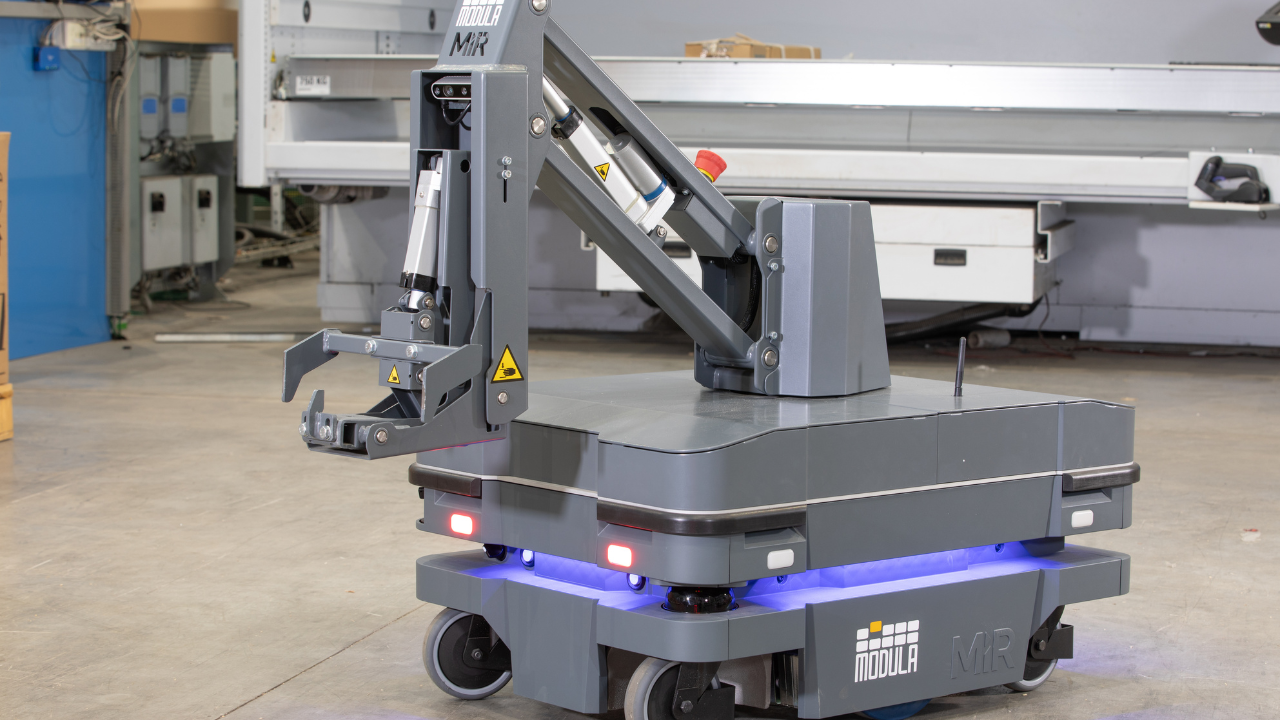
Let us delve into some vital aspects that determine ways how autonomous mobile robots provide great flexibility in various tasks.
Adaptability to changing layouts
Autonomous mobile robots can readily adjust to modifications in production or warehousing design. If the layout of a facility changes, these robots may follow new courses without requiring retraining, making them more versatile than stationary robots.
Ability to perform multiple tasks
In contrast to stationary robots, autonomous mobile robots may do a variety of activities. They are frequently made for a specific function. They can deliver goods, sort things, aid in picking, or undertake restocking responsibilities, giving adaptability throughout various phases of operations.
Scalability
An organization may deploy additional autonomous mobile robots as demand increases without having to make major infrastructural upgrades. Their ability to adapt enables them to collaborate effectively, handling assignments with efficiency and growing as company requirements change.
Integration with existing systems
It is possible to combine autonomous mobility robots with current inventory control or warehouse management systems (WMS). They may now follow instructions in real time, modify their assignments, and make sure everything run smoothly in tandem with current procedures.
Mobility across different environments
Autonomous mobile robots are not limited to a particular place. Therefore, they may roam between several settings, such assembly lines or warehousing zones. They can easily manage different manufacturing phases or order fulfillment because to their mobility.
The conclusion
Compared to fixed robotic systems, autonomous mobile robots have unparalleled flexibility, enabling enterprises to increase output, enhance efficiency, and adjust to changing demands.