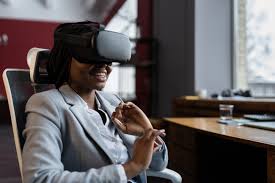
Introduction to Virtual Reality Training
Virtual Reality (VR) training is an innovative method that uses immersive technologies to create a virtual environment where individuals can learn new skills, practice real-world scenarios, and engage in interactive education. It transforms the traditional training experience by incorporating 3D environments that simulate real-life situations, allowing learners to practice without any real-world consequences. In today’s fast-evolving industries, VR training has become an essential tool for enhancing learning experiences across different sectors, from healthcare to corporate settings.
Benefits of Virtual Reality Training
Immersive Learning Experience
One of the key benefits of VR training is its immersive nature. Learners can engage with complex subjects in a more hands-on way. Instead of reading or watching a video, trainees are placed in a simulated environment where they can practice and repeat tasks until they reach proficiency.
Real-World Simulations
VR training allows participants to simulate real-world experiences. For instance, healthcare professionals can practice surgery in a virtual operating room, while manufacturing employees can simulate the use of heavy machinery without the risks involved in actual operation. These simulations help bridge the gap between theory and practical application.
Safe Learning Environment
VR provides a risk-free environment for learners. In industries like military or industrial settings, making mistakes can be costly or even life-threatening. With VR, individuals can repeatedly practice critical procedures in a virtual setting without any actual dangers, making it an ideal training tool for high-risk professions.
How VR Training Works
Hardware Used in VR Training
VR training requires specialized hardware to create a fully immersive experience. This includes VR headsets, controllers, and sensors that track movements and replicate them in the virtual world. Headsets like Oculus Quest or HTC Vive are commonly used in VR training programs.
Software and Applications in VR Training
Software plays a crucial role in VR training by providing interactive simulations and environments. Companies often develop custom VR applications tailored to their specific training needs, allowing for scalability and repeatability. These programs can be integrated into existing training curriculums to enhance overall learning effectiveness.
Industries Benefiting from VR Training
Healthcare
In healthcare, VR is revolutionizing training by allowing medical professionals to practice surgeries, learn about anatomy, and respond to emergency situations without any risks involved. It is especially useful for enhancing the skills of surgeons and emergency response teams.
Manufacturing and Engineering
VR training in manufacturing enables workers to practice handling complex machinery in a safe and controlled environment. It also helps in understanding new production processes and safety procedures, which ultimately reduces on-the-job accidents.
Military and Defense
The military uses VR to simulate combat scenarios, mission rehearsals, and equipment training. This helps soldiers prepare for various situations without the need for live ammunition or physical deployment.
Education Sector
VR in education is transforming classrooms by allowing students to engage with subjects in an interactive way. Whether it’s exploring historical events or conducting virtual science experiments, VR makes learning more engaging and effective.
Impact of VR Training in Healthcare
Surgical Simulations
VR training enables medical students and surgeons to perform surgeries in a virtual environment. These simulations allow professionals to practice procedures repeatedly, improving their skills and confidence before operating on real patients.
Medical Procedures and Emergency Response Training
In emergency medical training, VR helps in simulating crises, such as cardiac arrest or trauma, allowing first responders to practice their responses in real time. This results in quicker decision-making and improved patient outcomes.
VR Training in Corporate Settings
Employee Onboarding
VR can enhance employee onboarding by familiarizing new hires with the workplace, policies, and procedures through virtual tours and simulations. This creates a more interactive and engaging onboarding experience.
Soft Skills Training
For soft skills like communication, leadership, and customer service, VR offers immersive role-playing scenarios. Employees can practice dealing with various situations and receive feedback on their performance in real-time.
Advantages of VR Over Traditional Training Methods
Enhanced Engagement
VR training keeps learners engaged by offering a hands-on experience rather than passive learning. The interactive nature of VR enhances retention rates, helping learners absorb more information in a shorter period.
Cost-Effective Solutions
While the initial cost of VR technology might be high, it can significantly reduce long-term training expenses. There’s no need to rent physical spaces, and the content can be reused multiple times, making it a cost-efficient option for large-scale training.
Scalability and Customization
VR training solutions can be scaled to fit the needs of any organization, from small businesses to large corporations. They can also be customized to address specific learning objectives, making it easier to tailor training to the company’s requirements.
Challenges in Implementing VR Training
High Initial Costs
One of the main challenges of VR training is the high upfront investment in equipment and software. However, as technology advances, the costs are expected to decrease, making it more accessible to smaller companies.
Technological Limitations
Although VR technology has come a long way, it still faces limitations such as screen resolution, motion sickness, and the need for constant updates to improve user experience.
Resistance to New Technologies
Some employees or trainers may resist adopting new technologies like VR due to unfamiliarity or concerns about the learning curve. Adequate support and training are essential to overcome this resistance.
Best Practices for Implementing VR Training Programs
Assessing Training Needs
Before implementing a VR training program, companies should assess their training needs and determine whether VR is the best solution. Not all training scenarios require virtual simulations.
Choosing the Right VR Platform
Selecting the right VR platform is critical. Companies should evaluate their options based on the complexity of the training, budget, and available hardware.
Providing Adequate Support and Training
To ensure the success of VR training programs, it’s essential to offer adequate support and training to employees. This ensures smooth adoption and effective use of the technology.
Examples of Successful VR Training Programs
Case Study 1: VR in Medical Training
Medical schools have implemented VR training programs to help students practice surgeries and medical procedures in a virtual environment, improving their skills and confidence.
Case Study 2: VR for Employee Safety in Industrial Settings
Several industrial companies have used VR to train employees on safety protocols, leading to a reduction in workplace accidents and improved adherence to safety procedures.
Future Trends in Virtual Reality Training
Integration with AI and Machine Learning
The integration of AI with VR training will create more personalized learning experiences. AI can analyze learners’ progress and adjust the difficulty level or content to suit their needs.
Expansion of VR Training in Remote Workplaces
As remote work becomes more prevalent, VR training will play a significant role in delivering interactive learning experiences to employees worldwide, bridging the gap between distance and engagement.
How to Choose the Right VR Training Solution for Your Business
Factors to Consider
When choosing a VR training solution, consider factors like the type of training, scalability, ease of use, and hardware requirements.
Budget and ROI Analysis
It’s important to conduct a thorough ROI analysis to understand how VR training can deliver value to your business and whether the investment is worthwhile.
The Role of VR in Remote Learning
VR in Online Education
Online learning is more immersive with VR, allowing students to engage in virtual classrooms, participate in hands-on projects, and interact with peers and instructors.
Collaborations and Interactive Classrooms
VR technology facilitates collaboration among students and teachers in virtual settings, enhancing the learning experience and enabling global participation.
Conclusion
Virtual Reality training is transforming the way we learn and practice skills across various industries. With its immersive and interactive approach, it allows for real-world simulations that can be repeated safely and efficiently. Although challenges like cost and technology adoption exist, the long-term benefits make VR training a powerful tool in education, healthcare, corporate environments, and beyond. As VR technology evolves, it will continue to revolutionize training programs, making learning more engaging, effective, and accessible.